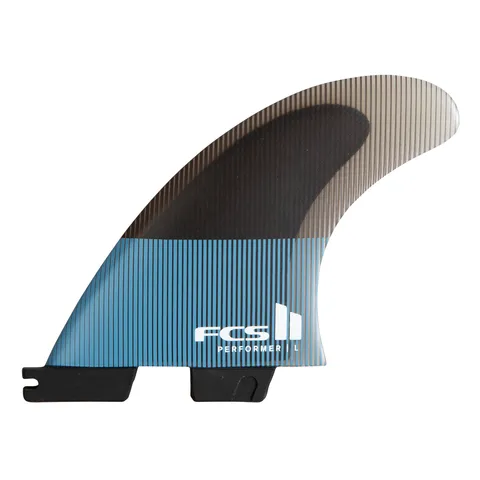
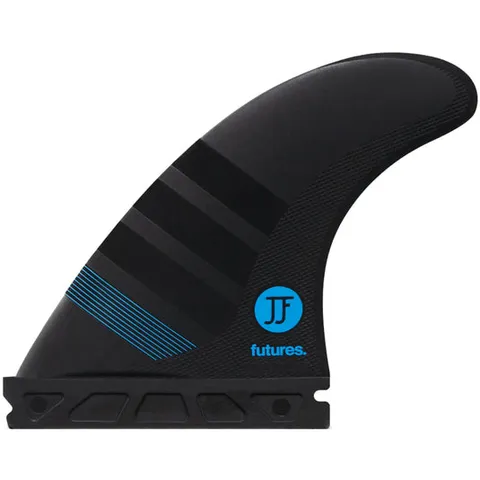
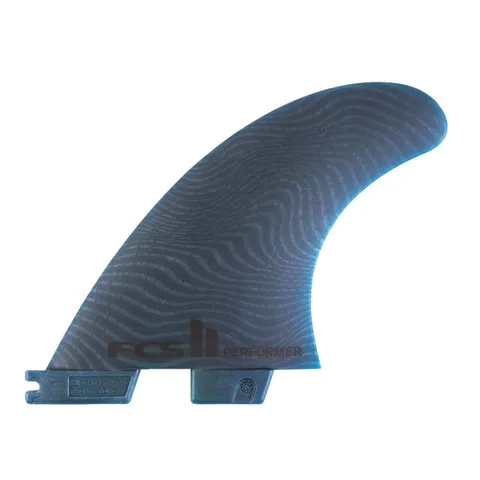
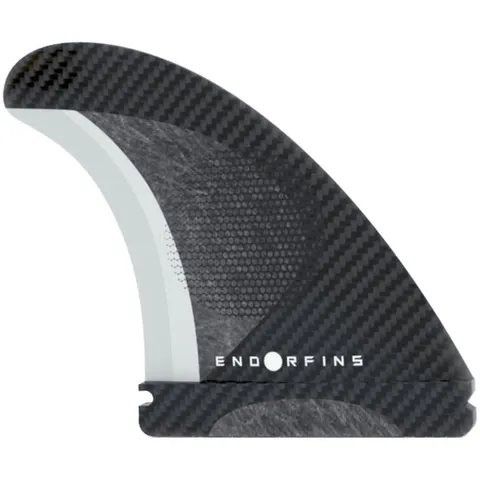
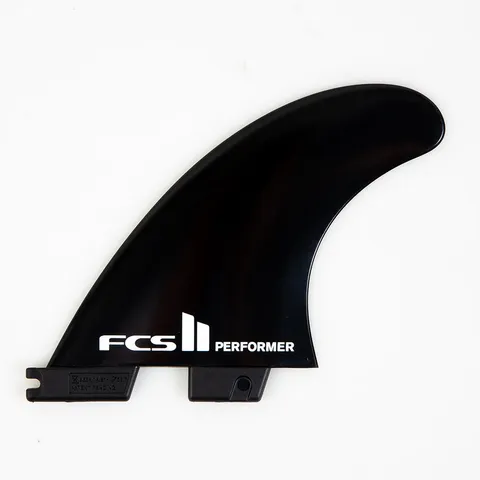
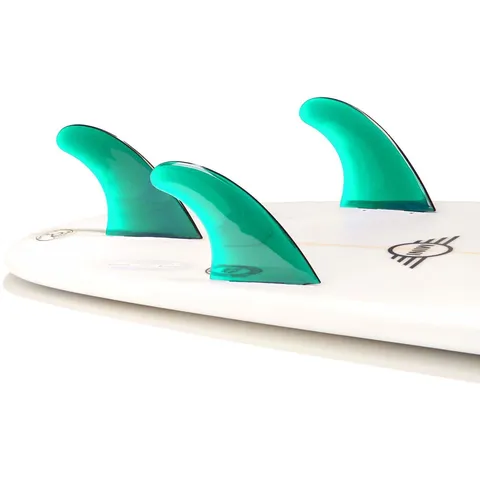
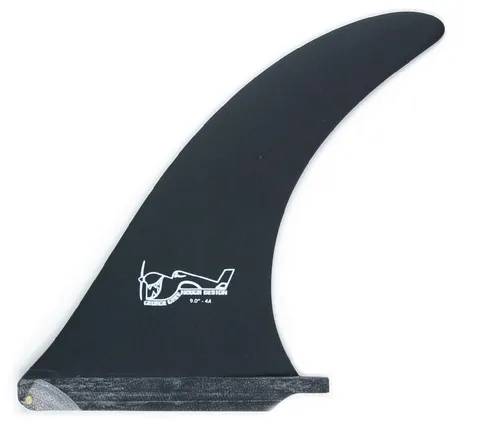
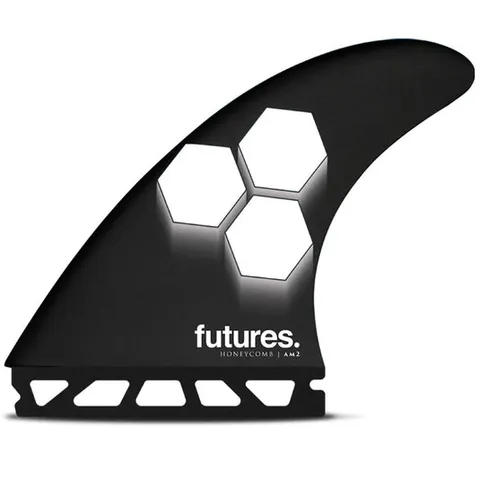
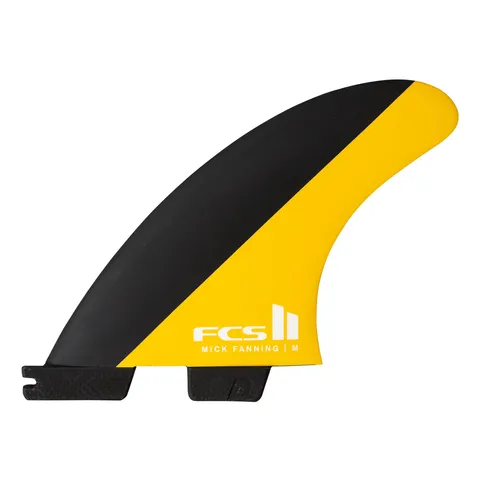
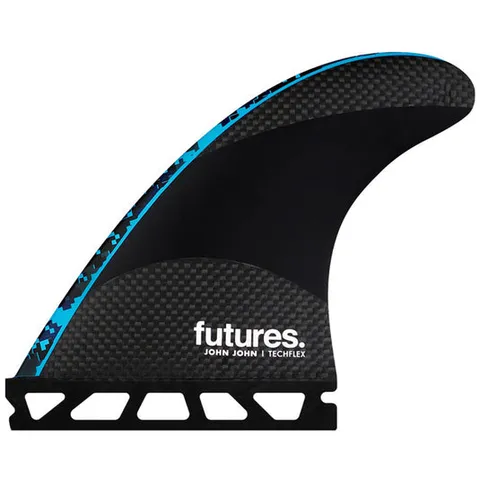
Fins are the cheapest meaningful performance upgrade in surfing. The molded plastic set that came with your board technically works, but a proper set changes how the board accelerates, holds through turns, and forgives sloppy footwork. For beginner and intermediate surfers the difference is bigger than it is for pros, because a balanced, slightly flexible fin covers up timing mistakes and helps you carry speed through flat sections while you learn.
The market splits into three broad bands. Under about $50 you get glass-filled nylon or polycarbonate sets from brands like Dorsal and the entry lines from FCS: real upgrades over stock fins, ideal as travel spares, but with a duller flex response. From roughly $75 to $135 sit the workhorse composite sets, including the FCS II Performer and the Futures John John Florence Alpha, which is where most improving surfers should spend. Above $140 you enter signature-model territory built with honeycomb, carbon, and air-infused cores. Those fins are lighter and livelier, though the gains only show up once your rail surfing is developed enough to load them.
One thing to settle before you buy anything: your fin box system. FCS II boxes take FCS II fins, Futures boxes take Futures fins, and the two do not interchange. Every fin in this guide comes in one system or the other (a few budget sets ship in both), so check the plugs on your board first. Sizing matters too. Most brands size by rider weight, and a medium suits roughly 130 to 175 pounds.