Best Of
The best surfing gear, ranked
Honest, tier-by-tier rankings (from budget to premium) so you can spend wisely whatever your budget. Updated for 2026.

Surfboards
Learning to surf is mostly a problem of paddling and wave-count, not of having the sharpest board. The single biggest mistake new and improving surfers make is buying a board that's too short, too thin, and too advanced because it looks like what the pros ride. The boards that actually get you standing up and trimming down the line are bigger, softer, and far more forgiving, and the good news is that the best of them are also among the cheapest. A genuinely great beginner-to-intermediate board is a solved problem in 2026, and you do not need to spend $700 to get one.

Wetsuits
A wetsuit is the single most important purchase a new surfer makes after the board itself, it's the difference between a cold, cut-short session and an hour of actually learning to read waves. But the market is confusing on purpose: the same 3/2mm thickness can cost $150 or $520, and the price tags rarely explain what you're actually paying for. This guide is built for beginner-to-intermediate surfers who want to understand that gap before they spend.

Leashes
A leash is the cheapest piece of surf gear you'll buy and the one most likely to ruin your session, or your day, when it fails. For beginner and intermediate surfers it does two jobs at once: it keeps your board from becoming a runaway projectile that endangers other people in the lineup, and it keeps you connected to the only flotation device you have when you're tired, scared, or caught inside. Yet most surfers grab whatever is hanging by the register, and Amazon's listings make it nearly impossible to tell a $20 throwaway from a $55 leash that will outlast three boards.

Traction Pads
Wax is the default way most people grip a surfboard, but anyone past their first few sessions knows the routine: re-waxing before every paddle-out, scraping off the gunk when it goes brown, and watching it melt into a slick mess on a hot day. A traction pad, a sheet of textured EVA foam that adheres permanently to the tail (and sometimes the deck), solves all of that. Stick it on once and it grips your back foot for the life of the board, which is exactly why nearly every shortboard you'll see in the lineup runs one over the rear fins.

Board Bags
A board bag is the cheapest insurance you'll ever buy for your surfboard. Whether you're tossing a softtop in the back of a hatchback or checking a quiver through three airports on a strike mission, the difference between a $40 day bag and no bag at all is usually the difference between a clean deck and a constellation of pressure dings, wax melt, and sun-yellowed foam. For beginner and intermediate surfers especially, riders who are still on their first or second board and want it to last, the right bag matters more than almost any other accessory.

Surfboard Fins
Fins are the cheapest meaningful performance upgrade in surfing. The molded plastic set that came with your board technically works, but a proper set changes how the board accelerates, holds through turns, and forgives sloppy footwork. For beginner and intermediate surfers the difference is bigger than it is for pros, because a balanced, slightly flexible fin covers up timing mistakes and helps you carry speed through flat sections while you learn.

Surf Wax
Walk into any surf shop and the wax rack looks like an afterthought, a pile of two dollar bars by the register. But wax is the only thing connecting your feet to the board, and the wrong bar for your water temperature will have you slipping off the deck before you ever get to your pop-up. For beginners and intermediates especially, a proper wax job is one of the cheapest performance upgrades in surfing, and shopping online makes it confusing because Amazon mixes single bars, three packs, and six packs with wildly different per-bar prices.

Rash Guards
A rash guard is the cheapest comfort upgrade in surfing. It stops the wax and paddling friction that leave beginners with a raw chest and stomach after a couple of hours on a soft top, and its UPF 50+ fabric blocks roughly 98 percent of UV, which shrinks the sunscreen job to your face, neck, and hands. For anyone surfing in boardshorts or layering under a wetsuit, it earns its keep on day one.

Surf Booties
Cold toes end more surf sessions than bad waves do. The right pair of booties keeps you in the water an extra hour, protects your feet from rock and reef on the walk out, and still lets you feel the deck under your back foot. The wrong pair flushes with every duck dive, balloons with water, and turns your bottom turn into a guessing game. For beginner and intermediate surfers the stakes are real: you are still building foot awareness, so a sloppy bootie actively slows your progress.

Surfboard Racks
Ask any surf shop what actually kills surfboards and the answer is rarely the ocean. It is the garage floor, the car door, and the drive to the beach. A board leaned against a wall gets knocked over, a board tossed on bare crossbars gets pressure dings, and a board strapped down with a cheap ratchet gets a crushed rail. A proper rack, whether it lives on your wall or on your roof, is the cheapest insurance you can buy for a quiver, and for a beginner on a brand new foamie or a first fiberglass board it pays for itself the first time it prevents a repair bill.
Some links are affiliate links, and we may earn a commission at no extra cost to you. It never affects our rankings.
Free tools
More free tools to explore
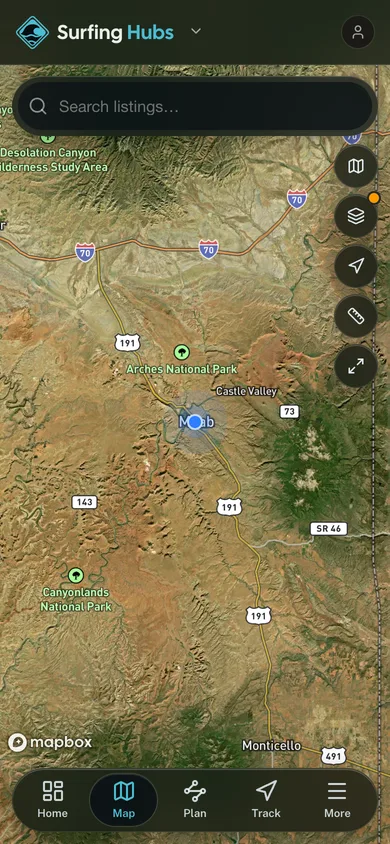
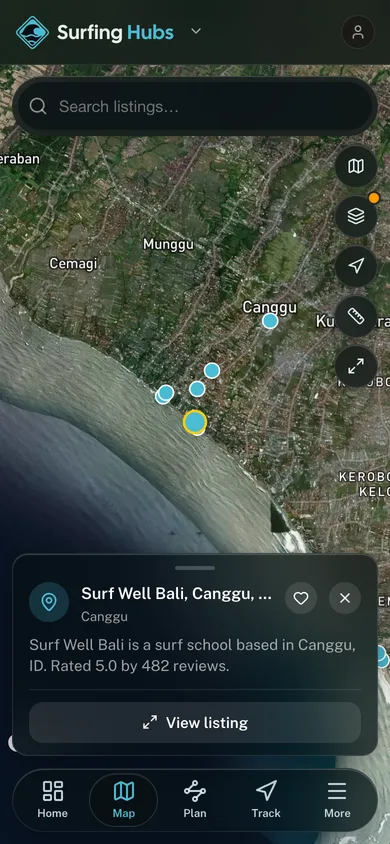
Everything Map
Every place we have mapped, on one screen.
Open Everything MapRoute Planner
Map a route or browse routes the community has shared.
Open Route PlannerSurf Clubs
Find surf clubs near you, or start your own with friends.
Open Surf ClubsLive Conditions
Real-time conditions for the spots you follow.
Open Live Conditions