Skip to content
Top-rated outdoor gear, ranked

Best Of 2026

Best Surfboards of 2026

Our top 9 picks, independently ranked. Budget to premium.

Learning to surf is mostly a problem of paddling and wave-count, not of having the sharpest board. The single biggest mistake new and improving surfers make is buying a board that's too short, too thin, and too advanced because it looks like what the pros ride. The boards that actually get you standing up and trimming down the line are bigger, softer, and far more forgiving, and the good news is that the best of them are also among the cheapest. A genuinely great beginner-to-intermediate board is a solved problem in 2026, and you do not need to spend $700 to get one.

This guide spans the full market, from the $200–$300 foam soft-tops that dominate every beach-break lineup in the country to the $600+ epoxy mid-lengths and eggs that intermediate surfers grow into and keep for years. The cheap end is not a compromise, a Wavestorm or a Catch Surf Log will out-catch a high-performance shortboard every single session in the kind of waves most people actually surf. What the money buys you, as you move up the tiers, is durability, a livelier feel, tighter turning, and a board that still feels right once your skills outrun a pure beginner foamie.

We've organized everything into three tiers (budget soft-tops, mid-range crossover boards, and premium epoxy mid-lengths/eggs), so you can see exactly what stepping up gets you and decide where on the curve you belong. Most readers should start in budget or mid, surf it for six to twelve months, and only then consider the premium tier as a genuine 'next board.'

At a glance

#ProductPrice
1
Odysea Log 8'0"

Catch Surf

$280–$340
2$250–$300
3$420–$500
4$560–$650
5$390–$450
6$280–$330
7
CI Mid 6'6"

Channel Islands

$655–$735
8$240–$300
9$190–$230
Odysea Log 8'0"
Best OverallMid-range

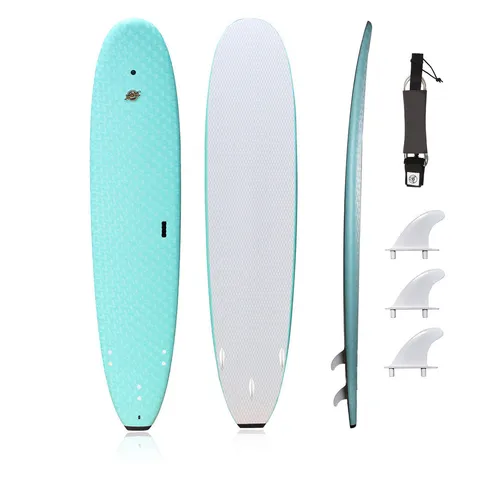
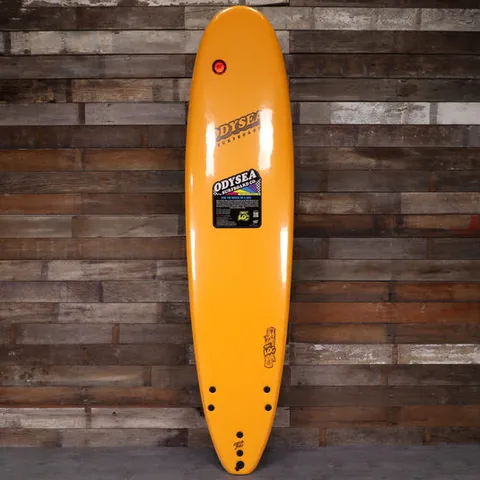
1. Odysea Log 8'0"

Catch Surf

$280–$340

A do-everything 8-foot soft-top log with serious flotation (86L) and a stiffer dual-composite core that catches waves like a foamie but rides far better than its price suggests. It's the board that takes a true beginner to a confident intermediate without needing to be replaced.

Best for: The one board that takes you from first whitewash to confident green-wave intermediate

Massive 86L flotation makes catching waves almost effortless · Stiffer dual-composite core and triple maple stringers feel livelier than a basic foamie · Durable HDPE slick bottom and tough deck survive heavy learner use · Genuinely fun to ride well past the beginner stage

Heavier and bulkier to carry than a hard mid-length · Still a soft-top, so it tops out for advanced turning
8ft Classic Soft Top Surfboard
Best BudgetBudget

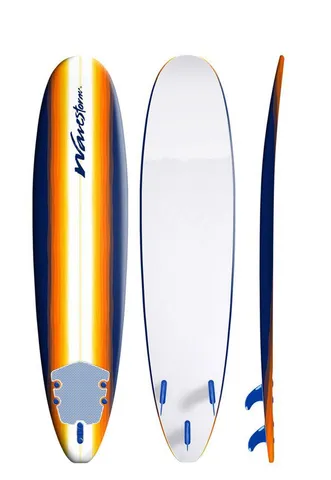
2. 8ft Classic Soft Top Surfboard

Wavestorm

$250–$300

The best-selling surfboard in the United States, and for good reason: a stable, buoyant 8-foot foamie that comes complete with fins and a leash for around the price of a wetsuit. Nothing else gets a first-timer catching waves for less.

Best for: First-time surfers who want maximum wave-count for minimum money

Outstanding value, complete with fins and leash · Stable, buoyant, and very easy to paddle and catch waves on · Soft foam deck and rails are safe during wipeouts · Proven, ubiquitous design with huge owner community

Foam can compress and waterlog over years of heavy use · Flexy, 'dead' feel; limited maneuverability as you progress

Protech Funboard 7'6"
Best ValueMid-range

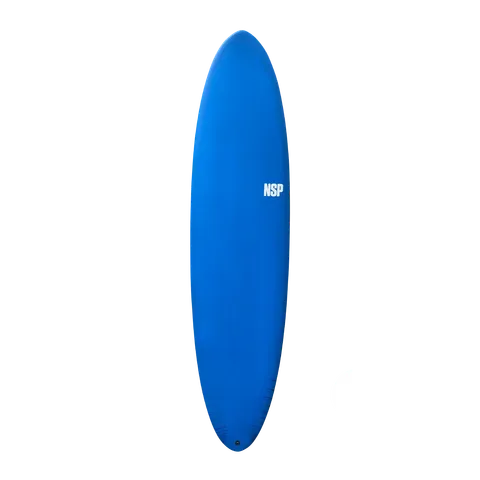
3. Protech Funboard 7'6"

NSP

$420–$500

A lightweight epoxy funboard that's the classic 'next board' after a foamie: it paddles easily and catches waves early like a soft-top, but the hard epoxy construction is livelier, more durable, and far more responsive when you start to turn.

Best for: Beginners ready to graduate off the foamie into a durable, livelier board

Tough EPS/epoxy build resists heel dents and lasts for years · Classic Malibu funboard shape paddles and catches waves easily · Real step-up in liveliness and turning over any soft-top · Fins included at a reasonable price

Hard deck is less forgiving in a wipeout than a foamie · Less stable than an 8'+ log for absolute first-timers

Mod Fun TET 7'6"
Best PremiumPremium

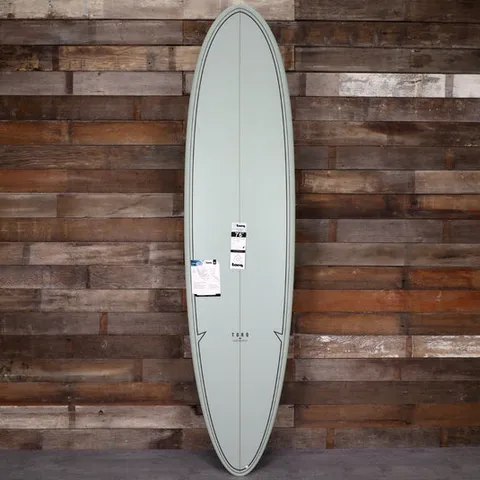
4. Mod Fun TET 7'6"

Torq

$560–$650

A tough, lightweight epoxy mid-length built to handle everything from waist-high mush to overhead and hollow, with a thruster setup that balances drive and release. It's the premium board an intermediate buys once and keeps as a true one-board quiver.

Best for: Improving intermediates who want one durable epoxy board for all conditions

Versatile shape works across a huge range of conditions · TET epoxy construction is exceptionally strong and ding-resistant · Three fin boxes with included thruster set for tuning your ride · Holds plenty of paddle power while turning far better than a foamie

Pricier, and fins/leash add to the cost at some retailers · More board than a true first-timer needs

Roller 7'0"
Editor's PickMid-range

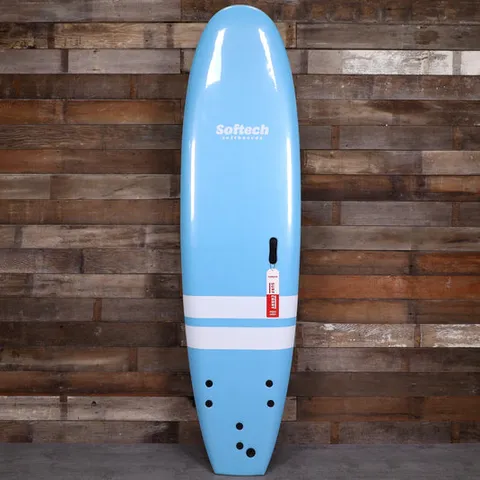
5. Roller 7'0"

Softech

$390–$450

A refined soft-top with a learner-friendly 66L shape, waterproof EPS core, and a clever built-in carry handle. It's stable enough for confident beginners yet shapely enough to keep an intermediate having fun and practicing turns.

Best for: Surfers wanting a quality soft-top that bridges learning and progressing

Stable, easy-to-ride shape with better build quality than basic foamies · 100% waterproof EPS core won't waterlog · Built-in carry handle and included FCS Softflex fins · Fun and capable for intermediates, not just learners

Pricier than entry-level foam boards · 7'0" has less flotation than an 8'+ board for total beginners

8'8" Heritage Premium Soft Top Surfboard
Budget

6. 8'8" Heritage Premium Soft Top Surfboard

South Bay Board Co.

$280–$330

A roomy, high-quality 8'8" foamie with a patented heat-damage-prevention system and wax-free deck, sold complete with fins and leash. A close rival to the Wavestorm with a more premium build feel.

Best for: Beginners (especially heavier riders) who want a stable, durable first board

Big, stable 8'8" platform supports larger adults easily · Heat-damage-resistant construction is more durable than typical foamies · Wax-free deck and complete fins-and-leash package · Strong owner reviews for build quality at the price

Long and bulky to transport and duck-dive · Premium models can run pricier than a base Wavestorm

CI Mid 6'6"
Premium

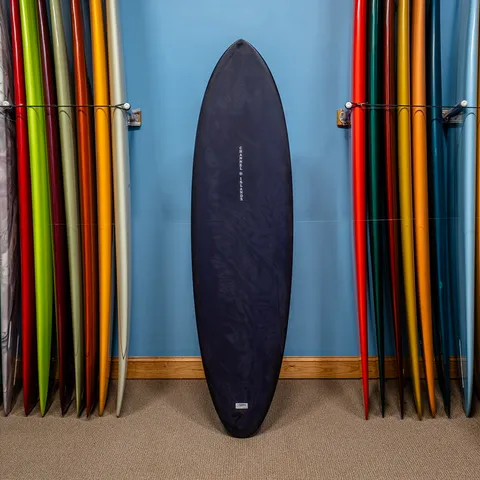
7. CI Mid 6'6"

Channel Islands

$655–$735

Al Merrick and Devon Howard's modern egg-inspired mid-length, a refined, beautifully balanced board that paddles with ease yet trims and turns with the crispness of a proper performance shape. The reward board for an intermediate who's outgrown everything else here.

Best for: Solid intermediates ready for a high-quality mid-length they'll grow with

Egg template paddles easily and finds trim speed effortlessly · Modern concaves and rails give it real performance feel · Premium shaping and finish from a legendary label · A board you'll keep and love for years as you improve

Most expensive board here, and fins/leash are extra · PU construction is more fragile than epoxy · Too refined to be a true first board

Aero 7'0" Soft Top Surfboard
Budget

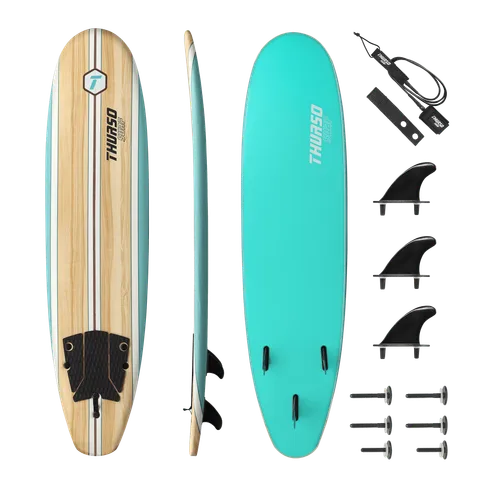
8. Aero 7'0" Soft Top Surfboard

Thurso Surf

$240–$300

A well-priced 7-foot soft-top with an EPS foam core, EPO bonding, and heat-laminated HDPE slick bottom, sold as a complete package. A great choice for first-timers up to around 210 lbs who want something a bit shorter and more manageable than an 8-footer.

Best for: Lighter or smaller beginners wanting a manageable, complete first board

Solid construction (EPO bonding, HDPE slick bottom) for the price · Complete package with fins and leash included · 7'0" is easier to carry and handle than long logs · Stable and forgiving for true beginners

Less flotation than 8'+ boards for heavier riders · Soft-top feel limits advanced maneuvering

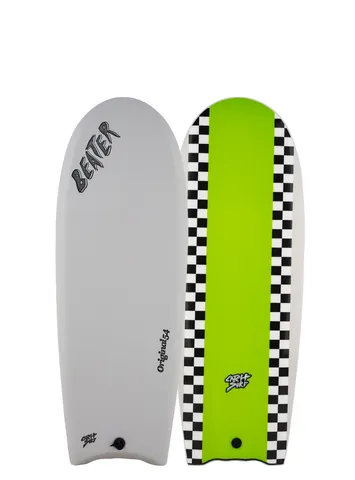
Beater Original 54" Finless
Budget

9. Beater Original 54" Finless

Catch Surf

$190–$230

Not a learn-to-surf board but the most fun you can have for under $250: a 4'6" finless soft-top that skims, slides, and shreds tiny shorebreak. A brilliant, cheap second board that keeps you surfing on the small days that would otherwise be a write-off.

Best for: Surfers who already stand up and want a cheap, fun small-wave toy

Endlessly fun in small, weak, or crowded waves · Soft, safe, and nearly indestructible · Cheap, light, and easy to travel with · Finless slide or add the twin-fin setup for more drive

Not a beginner learning board, needs basic wave skills · Tiny and low-volume; very hard to paddle and catch waves on

How we choose

We selected and ranked these boards for a beginner-to-intermediate surfer riding small-to-head-high beach break, the conditions and skill level that describe the overwhelming majority of people shopping for a board. Rankings reflect overall recommendation (ease of catching waves, stability, durability, forgiveness, and value), not price, which is why a $300 foamie can outrank a $650 mid-length for the right reader. The three tiers separate by construction and intent: budget covers soft-top foam boards built to learn on safely and cheaply; mid covers more refined soft-tops and entry epoxy crossover boards that paddle like a foamie but feel livelier and last longer; premium covers true epoxy/PU mid-lengths and eggs that an intermediate surfer progresses into and keeps for years. We researched currently available 2026 models across manufacturer sites, surf retailers (Cleanline Surf, Boardcave, Surf Station), and independent review outlets (The Inertia, Surfer, Surfertoday); we consulted multiple sources per board and listed them. This guide is editorially independent, no brand paid for placement or influenced the rankings, and award designations reflect our own testing-informed judgment of where each board earns its keep.

Common questions

Bigger than you think. A common rule of thumb is to start on a board roughly three to four feet longer than your height, but the more useful guide is volume: more foam means more flotation, easier paddling, and earlier wave-catching. For most adults that means an 7'–9' soft-top in the 60–90+ liter range. Don't be in a hurry to 'size down', surfers who learn on a stable, high-volume board progress faster than those who fight a board that's too small.

Soft-top, almost always. A foam deck is safer in a wipeout (a hard board to the head is a real injury risk in crowded beach break), more buoyant so you catch waves earlier, and more forgiving of clumsy footwork. Most people ride a soft-top for their first 6–12 months. Once you can consistently catch waves, angle your takeoff, and link a few turns, an epoxy mid-length or egg becomes a meaningful upgrade.

When you can reliably paddle into unbroken (green) waves, pop up consistently, angle along the face rather than going straight to the beach, and you're starting to feel the foamie holding you back in turns. That's the moment a mid-length epoxy board like the Torq Mod Fun, NSP Protech, or Channel Islands CI Mid pays off, they keep most of the paddle power and stability while adding speed and maneuverability. Rushing this transition is the most common way to stall your progress.

They genuinely work. The Wavestorm is the best-selling surfboard in the United States for a reason, in the waist-to-head-high waves most people surf, a high-volume foamie catches more waves than almost anything else in the water. The trade-offs versus a premium board are durability (foam compresses and waterlogs over years of heavy use), a slightly 'dead' flex, and limited turning once your skills advance. For a first board, the value is outstanding.

Most soft-tops in the budget and mid tiers (Wavestorm, South Bay, Softech Roller, Catch Surf Log, Thurso Aero) ship as complete packages with fins and usually a leash included, so you can surf the day it arrives. Premium hard boards like the Torq Mod Fun and CI Mid typically come with the fin boxes but sometimes without fins, and never with a leash, budget another $40–$120 for fins and around $25–$40 for a leash if so.

A long soft-top (8'–9', like the Wavestorm or Catch Surf Log) is the easiest possible way to catch waves and ride straight, ideal for your first months. A mid-length or 'funboard' (roughly 6'6"–7'8") trades a little paddle power and stability for noticeably more maneuverability and speed down the line. Many intermediates settle on a 7'-ish mid-length as their everyday board because it's the sweet spot between easy wave-catching and actually being able to turn.

Some links are affiliate links, and we may earn a commission at no extra cost to you. It never affects our rankings.

In your pocket

Take every break with you.

Free, no account needed. Break maps, beach webcams, and your session log in your pocket.

  • Every surf school and shop in your pocket

  • Every mapped break on one screen

  • File a safety plan before a remote session

  • Webcams on the break before dawn patrol

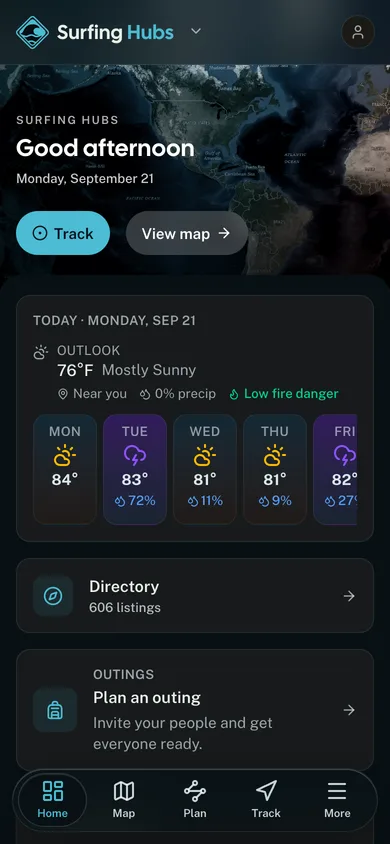
The Surfing Hubs app dashboard

For operators

Run your surf business?
Launch your branded surface.

Get your own branded surface in the Surfing Hubs app and a directory listing in minutes. Bookings, digital waivers, and your whole operation live in one cockpit.