Skip to content
Top-rated outdoor gear, ranked

Best Of 2026

Best Surfing Wetsuits of 2026

Our top 10 picks, independently ranked. Budget to premium.

A wetsuit is the single most important purchase a new surfer makes after the board itself, it's the difference between a cold, cut-short session and an hour of actually learning to read waves. But the market is confusing on purpose: the same 3/2mm thickness can cost $150 or $520, and the price tags rarely explain what you're actually paying for. This guide is built for beginner-to-intermediate surfers who want to understand that gap before they spend.

The short version of how wetsuits work: thickness is written as two numbers (a "3/2" has 3mm of neoprene in the core and 2mm in the arms and legs), thicker rubber keeps your organs warm while thinner rubber preserves paddle flexibility, and a 3/2 covers roughly 58–65°F water, spring-through-fall conditions in most of the US. The other two variables that drive price are seam construction (cheap flatlock seams let water flow through; glued-and-blind-stitched or fully taped seams stay dry and warm) and entry style (back-zip is easiest to get into and best for beginners; chest-zip seals better and flexes more, which is why it dominates the performance tier).

We've spread these ten picks deliberately across the price spectrum so you can see where the money goes. The budget tier gets you surfing for under $200 and is genuinely fine for warm-water learners. The mid tier, where most people should land, adds warmth linings, stretchier rubber, and real durability. The premium tier buys flexibility, fast-drying interiors, and seams that simply don't leak, which matters most once you're surfing year-round and care about a 90-minute session staying warm to the end.

At a glance

#ProductPrice
1$230–$280
2$210–$240
3$150–$170
4$200–$240
5$420–$470
6$480–$540
7$450–$500
8$260–$300
9$180–$220
10$400–$450
Dawn Patrol 3/2 Back Zip
Best OverallMid-range

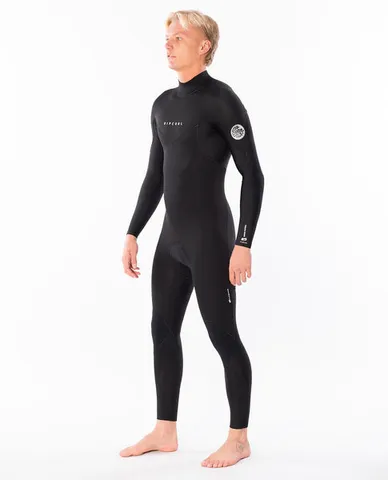
1. Dawn Patrol 3/2 Back Zip

Rip Curl

$230–$280

The quintessential do-everything workhorse: durable, warm enough for most conditions, and forgiving for surfers still dialing in their fit. If you want one suit that just works, this is it.

Best for: The everyday beginner-to-intermediate surfer who wants one reliable suit

Eco-friendly E5 natural-rubber neoprene with stretchy E5 Flash Lining · Durable hand-taped seams that hold up over years · Established, widely trusted everyday surf suit

Costs a bit more than entry-level budget suits · No smooth-skin chest panel, so less wind protection than premium suits

Epic 3/2 Back Zip Full
Best ValueMid-range

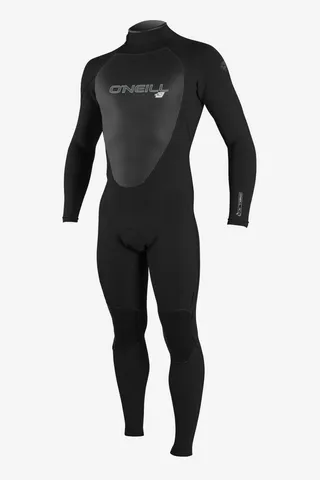
2. Epic 3/2 Back Zip Full

O'Neill

$210–$240

Borrows warmth and stretch features from O'Neill's high-end Psycho line but lands at a beginner-friendly price. The classic 'first good wetsuit.'

Best for: Beginners who want premium-derived features without the premium price

Warm FluidFlex Firewall chest and back lining · Flexible 100% UltraFlex neoprene throughout · Easy back-zip entry with a watertight neck seal · Windproof smooth-skin panel

Not the most durable option under heavy year-round use

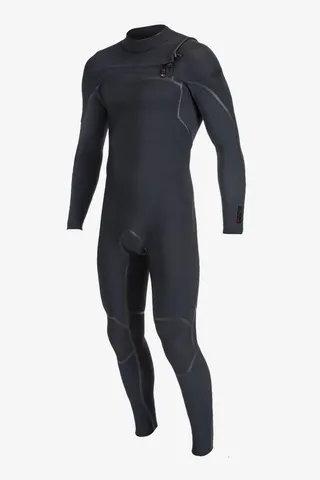
Reactor II 3/2 Back Zip
Best BudgetBudget

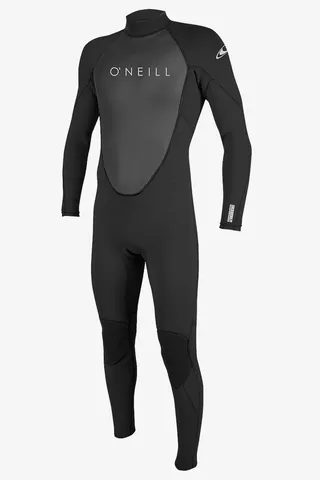
3. Reactor II 3/2 Back Zip

O'Neill

$150–$170

The smart entry point: simple, flexible, and genuinely comfortable for warm-water learners who don't need cold-water warmth. Hard to beat under $170.

Best for: Warm-water beginners and occasional surfers on a budget

Flexible UltraFlex neoprene · Wind-resistant and comfortable against the skin · Very affordable for a full suit

Not the most durable over time · Lacks the warmth of higher-tier suits for cold or windy days

Axis 3/2 Back Zip
Mid-range

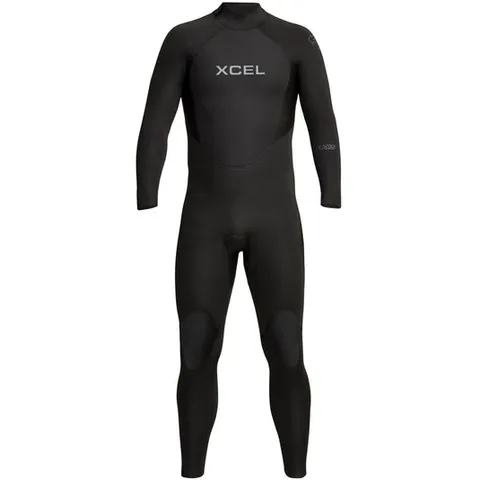
4. Axis 3/2 Back Zip

Xcel

$200–$240

A lightweight, sustainably-built mid suit with a warm interior lining and durable taped stress points, a strong value alternative to the better-known O'Neill and Rip Curl workhorses.

Best for: Value-minded surfers who want warmth and durability in a mid suit

Lightweight sustainable OCENA foam · Warm TDIR thermal interior · Durable Fusion X taped stress points and glued-and-blind-stitched seams

Not as flexible as Xcel's premium Comp models

Hyperfreak Fire 3/2+ Chest Zip
Editor's PickPremium

5. Hyperfreak Fire 3/2+ Chest Zip

O'Neill

$420–$470

O'Neill's best-performing suit with a graphene-boosted Firewall lining, exceptional flexibility and noticeably more warmth at the same thickness. The intermediate's upgrade pick.

Best for: Intermediates ready for a warmer, higher-performance chest-zip suit

TechnoButter 4 Firewall lining, among O'Neill's warmest and softest · Excellent flexibility and freedom of movement · Sealed F.U.Z.E. chest-zip closure with anti-flush barrier

Runs snug and needs a break-in period · Chest-zip entry is harder for newcomers

Best PremiumPremium

6. Flashbomb Fusion 3/2 Chest Zip

Rip Curl

$480–$540

Rip Curl's flagship: stitchless construction and seams engineered not to leak, paired with a famously fast-drying thermal liner. The benchmark for a warm, dry premium session.

Best for: Dedicated surfers who want the warmest, driest premium 3/2

Stitchless 'seams that don't leak' construction · Fast-drying Flash Lining for back-to-back sessions · Top-tier warmth and sealing for a 3/2

Premium price point · Cut runs slim and long. Check sizing carefully

R1 Yulex Regulator 3/2.5 Chest Zip
Premium

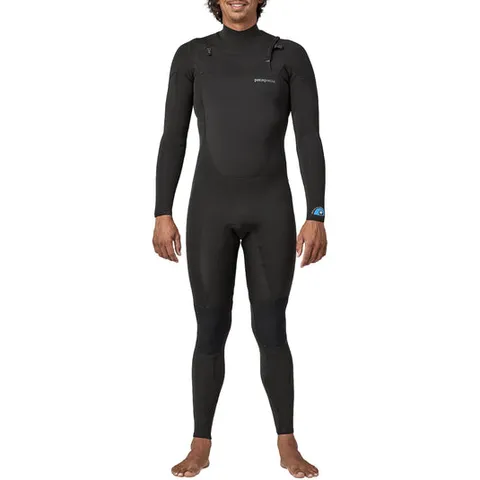
7. R1 Yulex Regulator 3/2.5 Chest Zip

Patagonia

$450–$500

The standout sustainable choice, natural Yulex rubber with Patagonia's bombproof build quality and ironclad warranty. Proof that eco no longer means a performance penalty.

Best for: Surfers who want top-tier warmth with the lowest environmental impact

Natural Yulex rubber, far lower carbon footprint than neoprene · Exceptionally durable construction · Backed by Patagonia's strong repair-and-warranty support

Feels stiffer initially and needs a break-in · Premium price

Absolute Natural+ 3/2 Chest Zip
Mid-range

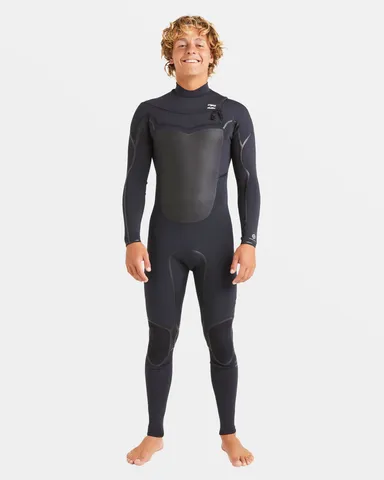
8. Absolute Natural+ 3/2 Chest Zip

Billabong

$260–$300

A neoprene-free mid suit with a warm graphene liner and windproof smooth-skin panels, an eco-minded everyday option at a sane price.

Best for: Eco-conscious everyday surfers who don't want to pay premium prices

Neoprene-free, sustainably sourced material · Warm graphene liner and windproof smooth skin · Durable Supertex-neo seam tape

No cuff seals at the wrists and ankles · Availability can be limited

Everyday Sessions 3/2 Chest Zip
Budget

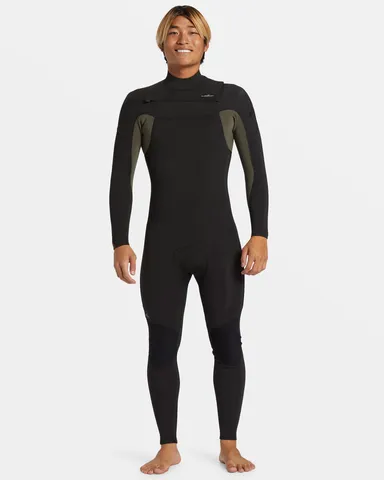
9. Everyday Sessions 3/2 Chest Zip

Quiksilver

$180–$220

A natural-rubber chest-zip suit at a near-budget price, a good way for a progressing beginner to try a chest-zip seal without spending mid-tier money.

Best for: Progressing beginners who want a chest-zip on a budget

Ocean natural-rubber construction in place of standard neoprene · Chest-zip seal at a value price · Solid everyday warm-water option

Not as warm or refined as mid and premium suits · Chest-zip entry is trickier for true beginners

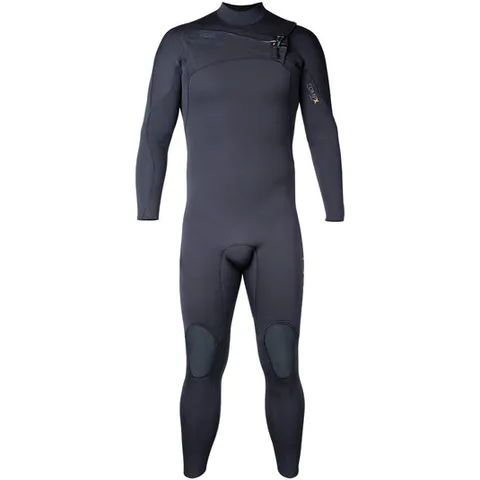
Comp X 3/2 Chest Zip
Premium

10. Comp X 3/2 Chest Zip

Xcel

$400–$450

Xcel's lightweight performance suit, praised for balancing flexibility and warmth, a great pick for intermediates who prioritize paddle freedom over maximum thermal protection.

Best for: Intermediates who want maximum flexibility in a warm-water performance suit

Lightweight, highly flexible performance neoprene · Good balance of stretch and warmth · Quality sealed chest-zip construction

Less warmth-focused than thermal-lined premium rivals · Premium price for a 3/2

How we choose

We ranked by overall value to a beginner-to-intermediate surfer, not by price, which is why a $260 do-everything workhorse outranks $500 performance suits for this audience. Picks were assembled from current 2026 retailer buying guides and brand spec sheets (Cleanline Surf, Rip Curl, O'Neill, The Inertia, Surfertoday), cross-checked against live product listings for current US street pricing. Tiers are defined by construction, not brand prestige: budget (~$140–$200) uses simpler seams and basic linings and suits warm-water/occasional surfers; mid (~$200–$300) adds GBS or taped seams, warmth linings, and stretchier rubber for the everyday surfer; premium (~$400–$540) buys the stretchiest neoprene, fast-drying thermal linings, and leak-resistant or stitchless seams for people in the water year-round. We are an independent editorial team: we accept no payment from brands for placement, rankings reflect our own read of the market, and retailer links may earn a commission at no cost to you.

Common questions

Match thickness to your water temperature. A 3/2mm full suit covers roughly 58–65°F and is the single most versatile choice for spring, summer, and fall in most of the US, it's the thickness we focused this guide on. If you regularly surf colder water (50–58°F) you'll want a 4/3mm; below ~50°F you move to a 5/4mm with a hood, boots, and gloves. When in doubt, a 3/2 (or a 4/3 if your local water runs cool) is the right first suit.

Buy a back-zip for your first suit. It opens wide and is dramatically easier to wriggle into and out of, especially if you have broad shoulders or limited flexibility. The trade-off is slightly more water flushing in at the zipper and a bit less back flex. Once you're a confident intermediate and want a warmer, more flexible seal, step up to a chest-zip, it's the standard on every performance suit for good reason, but it's genuinely harder to put on at first.

For a warm-water beginner surfing occasionally, a $150–$200 suit like the O'Neill Reactor II is completely fine, it'll keep you comfortable and won't hold back your learning. You're not wasting money. What you give up versus a $260+ suit is warmth on cold, windy days, all-day flexibility, and durability over years of heavy use. If you surf weekly or in marginal conditions, the mid tier pays for itself; if you surf a dozen warm sessions a year, the budget tier is the smart buy.

Snug everywhere, like a firm handshake, but not so tight you can't breathe or fully raise your arms. A wetsuit works by trapping a thin layer of water against your skin that your body warms; loose suits flush that warm water out and leave you cold. Pay special attention to the lower back, knees, and crotch: if there are baggy pockets there, the suit is too big. It should feel almost restrictive on dry land and loosen up noticeably once it's wet.

Traditional neoprene is petroleum- or limestone-based. Several brands now offer natural-rubber alternatives (Patagonia's Yulex, Billabong's Natural+, Rip Curl's and Quiksilver's natural-rubber linings), that cut the carbon footprint significantly. Performance has caught up: the Patagonia R1 Yulex Regulator in this guide is genuinely warm and durable. The trade-offs are usually a higher price and a slightly stiffer feel out of the box that loosens after a few sessions. If sustainability matters to you, you no longer have to sacrifice quality to get it.

A budget suit used hard might last 1–2 seasons; a well-made mid or premium suit cared for properly can go 4–5 years. The rules are simple: rinse it in cold fresh water after every session, never wash it in hot water or a machine, and dry it inside-out in shade, never in direct sun, which breaks down neoprene fast. Hang it folded over a thick or rounded hanger at the waist rather than the shoulders to avoid stretching it out.

Some links are affiliate links, and we may earn a commission at no extra cost to you. It never affects our rankings.

In your pocket

Take every break with you.

Free, no account needed. Break maps, beach webcams, and your session log in your pocket.

  • Every surf school and shop in your pocket

  • Every mapped break on one screen

  • File a safety plan before a remote session

  • Webcams on the break before dawn patrol

The Surfing Hubs app dashboard

For operators

Run your surf business?
Launch your branded surface.

Get your own branded surface in the Surfing Hubs app and a directory listing in minutes. Bookings, digital waivers, and your whole operation live in one cockpit.