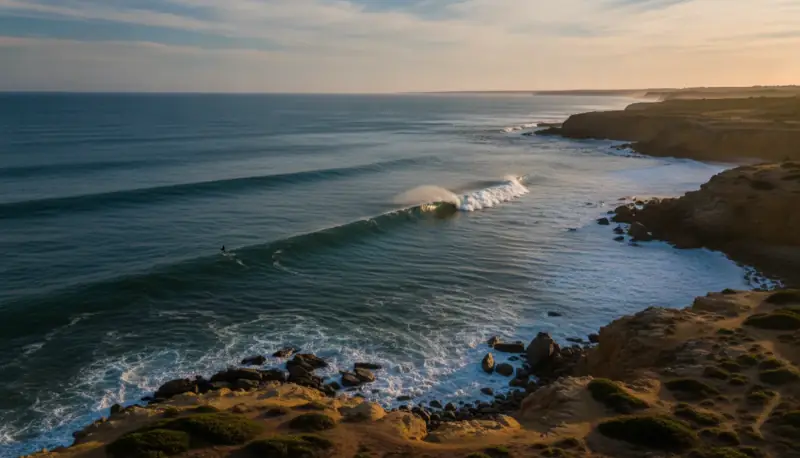
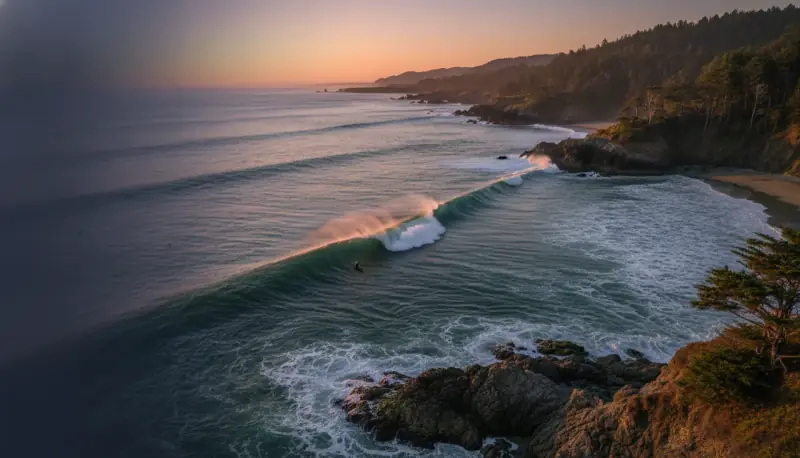
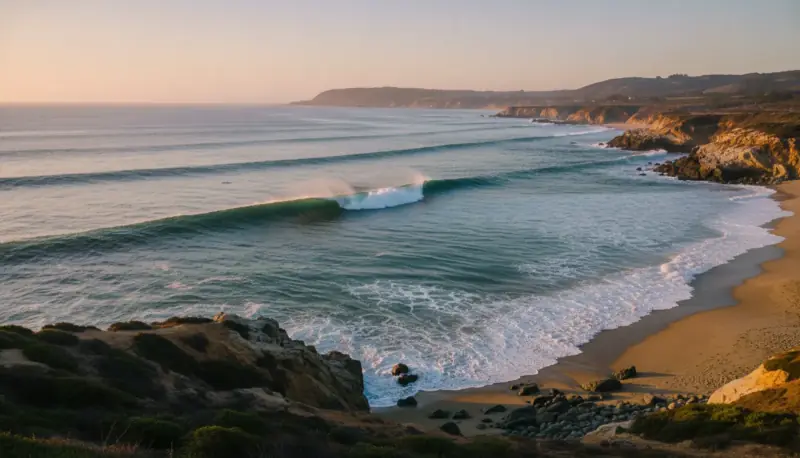
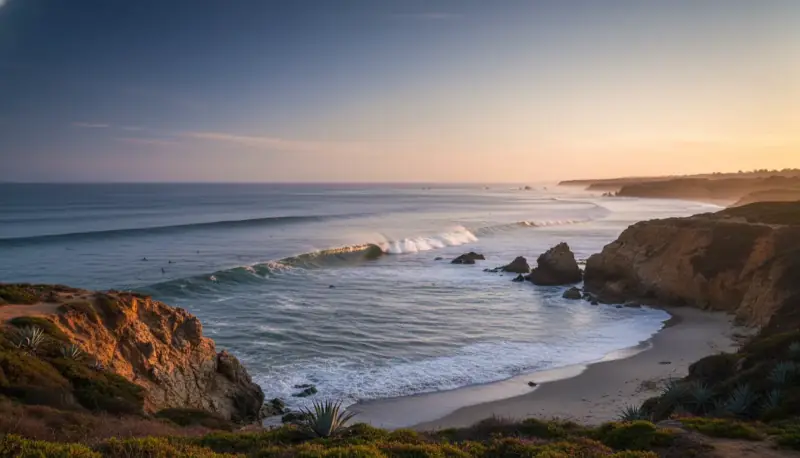
Costa Rica is the most popular destination for first-time surf-trip travelers in the Americas, and for good reason: consistent swell, warm water, a stable surf-school economy that's been around for 30+ years, and English is widely spoken at every legitimate camp.
The first decision is bigger than which camp to pick: it's which coast to pick. Costa Rica's Pacific and Caribbean coasts produce dramatically different beginner experiences in different months. Picking the wrong coast for the wrong week is the single most common mistake first-timers make.
This is a practical guide written from operator-vetted notes, not from a tourism-board calendar.
The two coasts at a glance
| Pacific | Caribbean | |
|---|---|---|
| Beginner reliability | High year-round | Seasonal (best Dec–Mar) |
| Wave size for beginners | 2–5 ft most days | 1–4 ft most days |
| Water temp | 78–84°F | 79–84°F |
| Wetsuit needed? | No, ever | No, ever |
| Crowd density (camps) | Heavy in dry season | Lower, less developed |
| Travel from San José | 3–5 hrs (depending on town) | 4–5 hrs (one main highway) |
| Best season for beginners | Apr–Jun, Nov–Dec | Dec–Mar |
The short version: Pacific is the safer first-camp choice for most travelers, most months. The Caribbean is the better choice if you're going in December–March and want a different culture and quieter beaches.
The Pacific coast: where most camps are
The Pacific coast has the bulk of Costa Rica's developed surf-camp economy. Camps cluster in five main towns:
Tamarindo (Guanacaste, north Pacific)
- The biggest, most developed surf town in the country.
- Lots of beach-break instruction. Multiple camps with packages from $1,200–2,500/week.
- Pros: easy logistics (Liberia airport 1 hour away), English everywhere, lots of camp choice.
- Cons: busy, touristy, can feel less like Costa Rica than other towns.
- Best for: group trips, families, travelers who want comfort and convenience.
Nosara / Playa Guiones (Guanacaste, north Pacific)
- Smaller, more polished, yoga-and-surf town.
- Excellent beginner-friendly beach break.
- Pros: consistent waves year-round, smaller crowds than Tamarindo, strong food/yoga ecosystem.
- Cons: more expensive: camps run $1,800–3,500/week. Dirt-road access deters some travelers.
- Best for: travelers willing to pay for atmosphere and consistent waves.
Santa Teresa (Nicoya Peninsula, central Pacific)
- The booming "next Tamarindo." Camps range from rustic-budget to luxury.
- Pros: long stretch of beach with multiple breaks; food scene is excellent.
- Cons: getting there is a haul (4–5 hours from San José, ferry-or-long-drive).
- Best for: travelers who want a longer-stay vibe and don't mind the logistics.
Jacó / Playa Hermosa (central Pacific)
- The closest surf town to San José (2 hours).
- Jacó itself is more party town than surf town; Hermosa just south is the actual surf spot.
- Pros: short transfer, lots of camp options, year-round waves.
- Cons: Hermosa is more advanced, most beginner instruction happens at smaller adjacent beaches.
- Best for: short trips, weekend-warriors, traveler-with-non-surfing-companion.
Pavones (south Pacific)
- Famous left-hand point. Not a beginner spot.
- Mentioned only to say: do not book a beginner trip to Pavones. It's an intermediate-and-up destination.
The Caribbean coast: different country, same passport
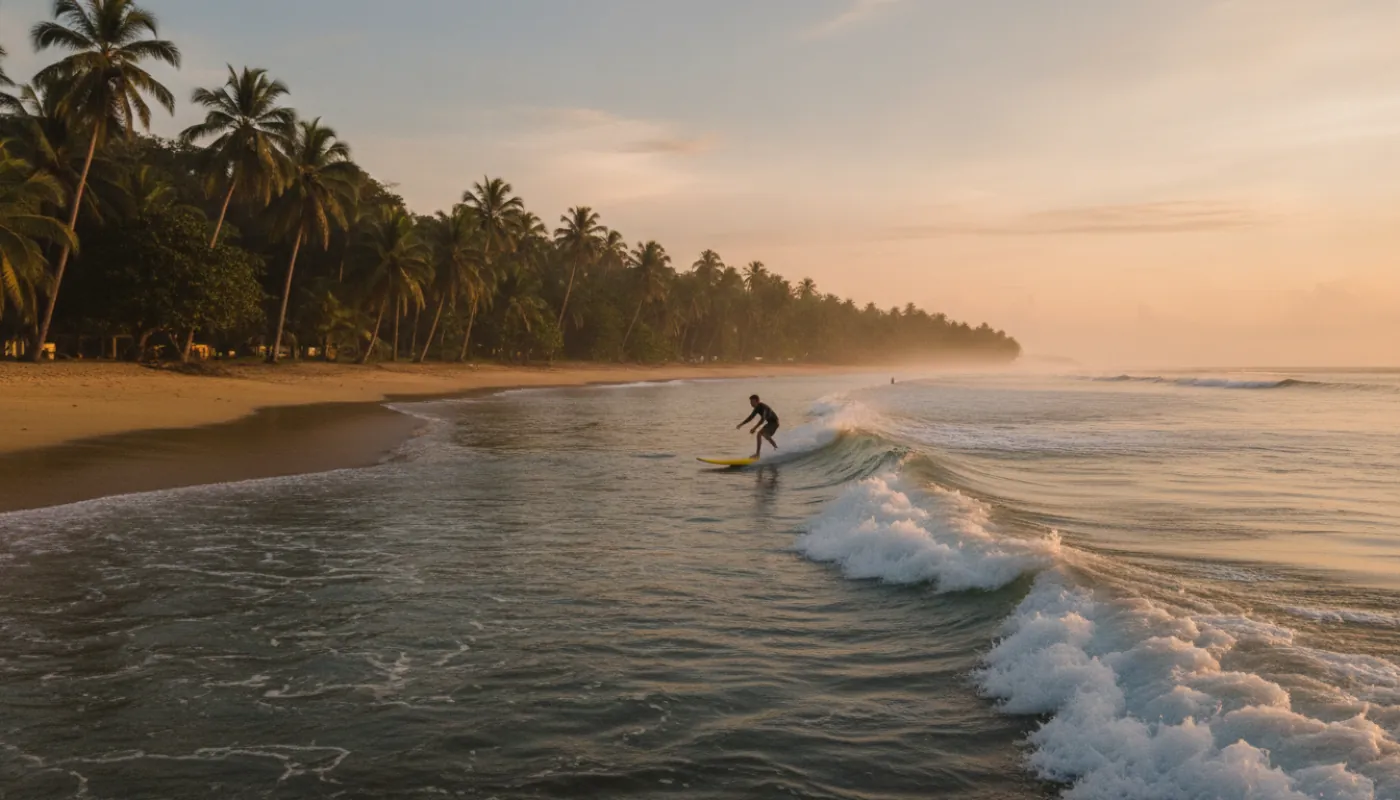
Costa Rica's Caribbean coast is culturally distinct from the Pacific: Afro-Caribbean influence, reggae bars, lush jungle, fewer tourists. The main surf town is Puerto Viejo.
Puerto Viejo de Talamanca (south Caribbean)
- Two main beginner breaks: Cocles (a beach break, often the lesson spot) and Playa Negra (mellower, also beginner-friendly).
- The famous Salsa Brava reef break is here too, not a beginner spot, but spectacular to watch.
- Pros: dramatically different vibe from Pacific, lower prices, less crowded camps.
- Cons: rain, but not on the schedule you'd expect. The Caribbean's rhythm is inverted from the Pacific: its driest, sunniest months are September–October (peak rain on the Pacific), with a second dry window in February–March. Its most consistent surf, though, rides winter ENE groundswell, roughly December–March.
- Best for: travelers in December–March chasing the best surf, or September–October chasing the best weather.
When to go
Costa Rica's seasons matter a lot:
- December–April (Pacific dry season): Pacific beach breaks are consistent, sunny, ideal for beginners. Crowded. Highest prices. Sweet spot for first trips.
- May–November (Pacific green season): Pacific gets afternoon rain, but mornings are still surfable. Quieter beaches. Lower prices. Some camps close in October–November.
- December–March (Caribbean's best surf window): the most consistent Caribbean swell (Salsa Brava fires), with rain easing to dry by February–March. Pacific is also great, Caribbean is the alternative, not the only choice.
- September–October (Caribbean's sunniest window): the driest, brightest weeks on the Caribbean and the Pacific's rainiest stretch, plus a secondary Caribbean swell, the one time the coast clearly out-weathers the Pacific.
- May–August, November (Caribbean's wetter months): surf is hit-or-miss; some camps reduce operations.
The trade-off window: mid-September through mid-October is the Pacific's rainiest stretch, but it's the Caribbean at its sunniest. If you're locked into those months, lean Caribbean.
What "good beginner surf camp" actually looks like
Across both coasts, the things that separate good camps from bad ones:
- Lessons capped at 4 students per instructor. Above this and you're not getting individual attention.
- Soft-top longboards (8–9 feet, foam) for first 2 lessons minimum. Not a hard-bodied board, regardless of instructor enthusiasm.
- Land-based instruction first. Pop-up technique, paddling stance, wave selection on the beach for 20+ minutes before water entry.
- Video review at least 1–2 times per week. Cheap, transformative for first-timer progression.
- Coaches who speak English fluently. Not "we have English coaches available". Confirm yours speaks fluent English at booking.
- A small staff of instructors who actually surf. Look at their Instagram. The good ones surf in their off-hours and post about it.
Red flags
- Groups of 6+ students with one instructor.
- "Lesson + you ride waves alone for 2 hours", that's a one-hour lesson, not a real surf experience.
- Camps that put you on a hard-bodied board on day one.
- No video review, no land-based pop-up instruction.
- Camps without insurance or a clear waiver (more common in Caribbean and smaller towns).
Cost ranges (1 week, all-in)
- Budget Caribbean (Puerto Viejo, basic hostel-style camp): $700–1,200.
- Budget Pacific (Tamarindo dorm, lessons included): $900–1,500.
- Mid-range Pacific (Nosara/Santa Teresa, private room, daily lessons, photos): $1,800–3,000.
- Premium Pacific (luxury surf-resort camps, Nosara/Santa Teresa): $3,000–6,000+.
Add ~$600 for flights from most US cities to Liberia (LIR) or San José (SJO).
What a first-trip schedule actually looks like
A typical 7-day surf camp:
- Day 1: Arrival, intro meeting, dinner.
- Day 2: First lesson (morning). Yoga or rest (afternoon).
- Day 3: Lesson (morning), gentle paddle session (afternoon).
- Day 4: Half-day off: town, jungle hike, off-day reset.
- Day 5: Lesson + video review.
- Day 6: Optional second-session with coach observing only.
- Day 7: Final solo session, brunch, departure.
If your camp is selling "10 lessons in 5 days," beware. Beginners don't have the paddling endurance for that volume. You'll come home injured or exhausted.
The honest recommendation
For a first-time surf-camp traveler:
- December–March: Pacific (Nosara or Tamarindo) for reliable waves; Caribbean (Puerto Viejo) if you want a quieter, less-touristed week.
- April–June: Pacific. Tamarindo or Santa Teresa. Best conditions of the year for beginners.
- July–November: Pacific, with rain tolerance. Or wait until the next dry season.
The right camp is the one with great instructors, small groups, and a reasonable schedule. Coast is the framing; instructor quality is the outcome.
If you operate a surf school or camp in Costa Rica (or anywhere), list your operation on Surfing Hubs, first-timers comparing camps should be able to find you on the things that matter, not just on Instagram.