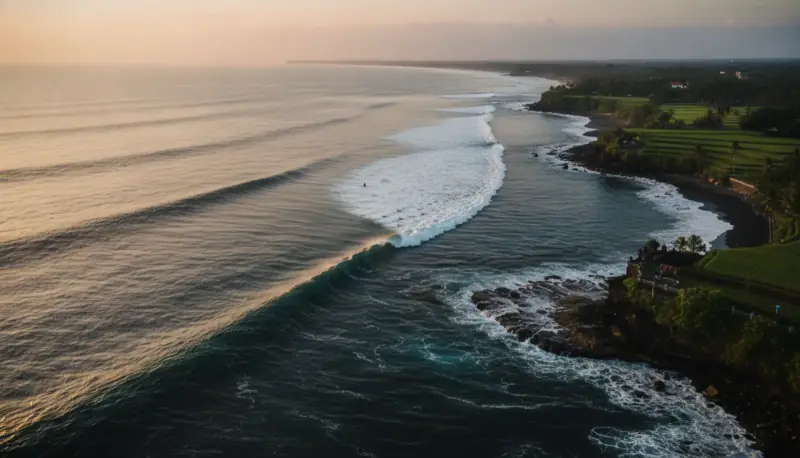
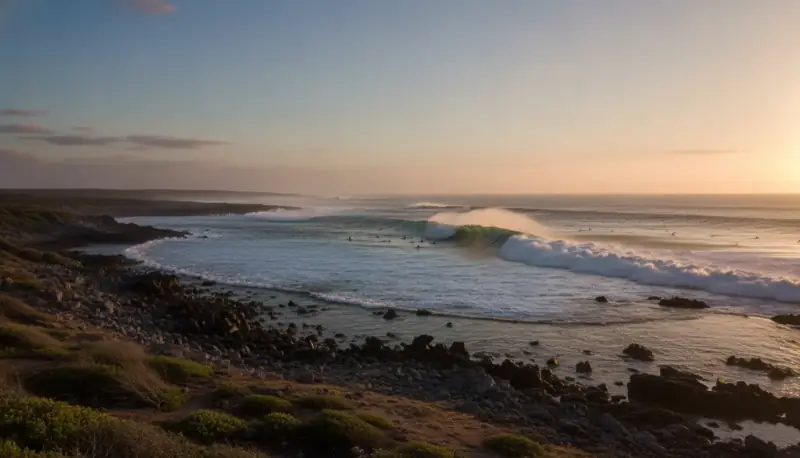
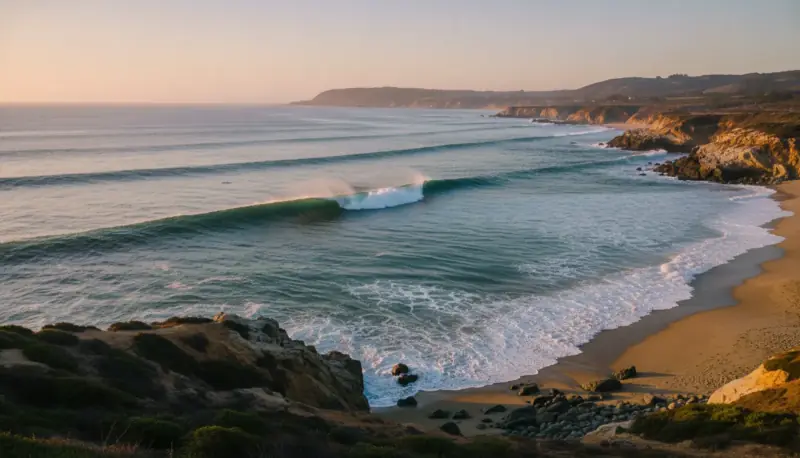
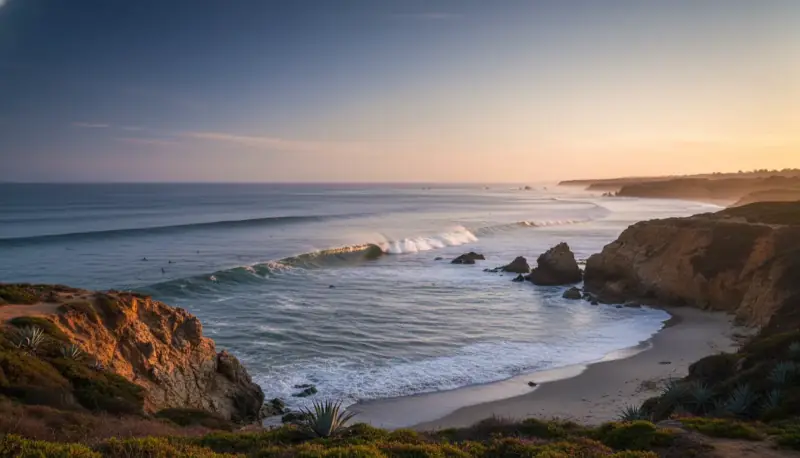
Hawaii's swell seasons are split by hemisphere. Winter (November–March) brings massive North Pacific swells that wrap around the islands' north and west shores, while summer (May–September) offers cleaner, smaller South Pacific swells on southern exposures. This means the "best time" to surf Hawaii isn't a single season, it's island-specific and break-dependent. Most visiting surfers book winter trips chasing Pipeline or Sunset Beach on Oahu's North Shore. That's the most obvious choice and often the wrong one if you're not a steep-drop big-wave veteran. Understanding these regional seasons and matching them to your skill level and crowd tolerance will make or break your Hawaii trip.
North Shore Oahu: Winter's Playground
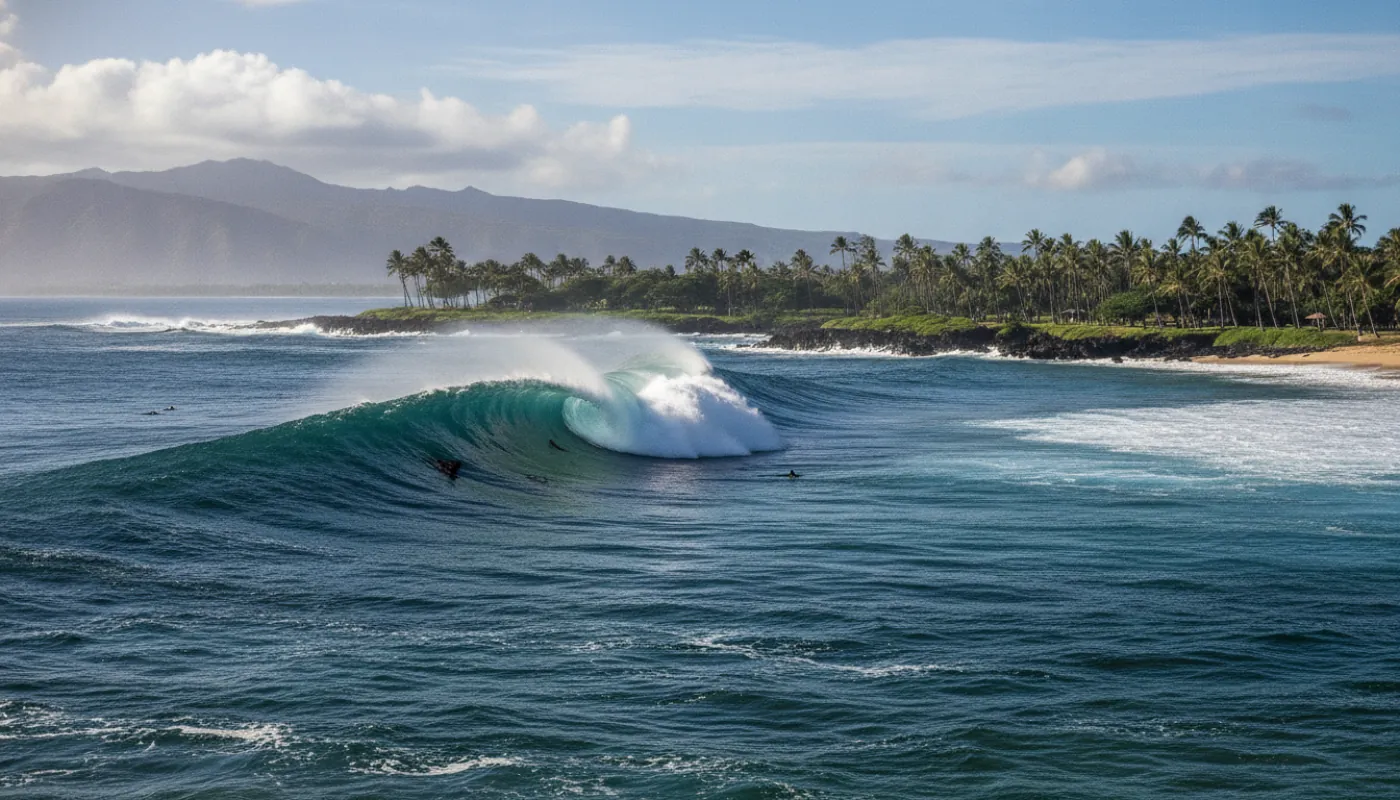
North Shore Oahu is the world's most visible big-wave theater and the destination that shapes most travelers' Hawaii timing. The window is tight: October through February, with November–January the sweet spot. During this period, North Pacific swells with 15–20-foot faces are routine at Pipeline, Sunset Beach, Waimea Bay, and Backyards. Crowds reflect this, parking is impossible by 7 a.m., and the lineup teems with pros and hungry intermediates. The trade-off is that your footage will be world-class, and if you're strong enough to handle a hollow, fast shore, you'll get the barrels of your life.
The skill gate here is real. Pipeline demands solid late-takeoff barrel awareness and recovery from wipeouts at consequence. Sunset Beach is deceptively heavy, a right-hand anvil that foreshortens and reforms in ways that trap unread surfers on the inside. Waimea is the opposite of an entry point: it's a genuine big-wave arena that doesn't switch on until swells reach roughly 20-foot-plus faces, and its shore-break and hold-downs are lethal, a wave to watch from the beach, not one to "step up" to. From January onward, swell size tapers, the water holds around 76°F (Hawaii's ocean rarely drops below the mid-70s even in winter), and crowds tighten. By March, North Shore is nearly dormant. Unless you're chasing a specific swell forecast or competing, book December or early January and accept the crowds as the tax on the destination.
Maui: Year-Round Consistency
Maui's a different animal. The island's protected west side (Lahaina) and the legendary Honolua Bay on the north shore don't follow the same seasonal wall as Oahu. Lahaina gets wrapped in winter swells and enjoys them because the break faces west/southwest and catches NW winter swell that funnels through the Maui–Molokai gap; summer small-wave days can still push shoulder-high waist-high rollers. Honolua Bay is more swell-dependent and peaks in winter, but the break's protected setup means it's glassy longer and rideable in lighter conditions than Oahu's exposed peaks.
The real advantage is crowd distribution and flexibility. Lahaina's lineup spreads surfers across multiple breaks (Shark's Teeth, Olowalu, Paia), so you rarely feel as jam-packed as North Shore. For intermediates and better, Maui is the smart winter choice: consistent 4–8-foot walls, less swell intensity than Oahu, and the ability to dodge the North Shore circus. Summer is also playable, especially June–August, when small persistent South Pacific swells keep Lahaina in the 2–5-foot range. Water temps run about 79–81°F in summer and 73–75°F in winter. Most operators and lesson outfits work year-round, so timing is flexible.
Hawaii Island: The Hidden Season
The Big Island's eastern and western coasts flip the north/south logic. The Kona side (west) gets most visiting attention because it's drier and faces calm reef breaks popular with beginners. In winter, Kona gets wrapped in west-facing swells and rocks 4–8-foot peelers: fun, organized, and uncrowded by Hawaiian standards. Summer is manageable but small (waist to shoulder). The Hilo side (east-facing) is the inverse: it maxes in summer with South Pacific swells, often delivering unwalled 3–6-foot runners when the rest of the state is flat. Water stays warm (roughly 76–82°F on the Kona side, a touch cooler (71–75°F) on the Hilo side), and lineups are a fraction of Maui or Oahu.
The catch is logistics. Hilo-side breaks are accessed from town-side roads and exposed to heavy rainfall, so working through iffy water quality is part of the deal. That isolation is also the appeal, you get capable local surfers but not the tourism overlay. Intermediates seeking mellow, less-crowded conditions should hit the Big Island in summer. If you want to explore different breaks without fighting crowds, the Big Island in June–August is seriously underrated.
Kauai's North Shore and Summer Sleepers
Kauai's north shore is Hawaii's quietest big-swell zone. Hanalei Bay and Tunnels receive the same winter North Pacific swells as Oahu but feel removed from the circus, partly because driving time and limited infrastructure deter day-trippers, and partly because the breaks are friendlier to intermediate surfing. Hanalei's wide, soft rollers in 4–8 feet make it the best beginner-friendly winter option in Hawaii. Tunnels is more technical (sharp takeoffs, shallow reef) and works better for intermediates to advanced, especially when a solid groundswell wraps in. Winter is non-negotiable for wave hunting, but crowds are still manageable by Oahu standards.
Summer on Kauai's north shore isn't dormant, small South Pacific swells and trade-wind bump keep Hanalei and Tunnels in the 2–4-foot range. Summer is optimal for surfers allergic to crowds: you get glassy, small, organized waves and a fraction of the winter traffic. The south shore (Poipu) can light up with summer South Pacific swells, delivering longer periods and more shape. Water runs about 74–75°F in winter up to 79–81°F in late summer, bikini-friendly year-round. For a balance of consistent waves and space to breathe, Kauai's summer is a secret that deserves wider discovery.
Timing Your Trip With Forecasts
To nail a Hawaii swell window, you need to read the North Pacific and South Pacific swell maps. NOAA publishes marine forecasts and swell models 10 days out; most serious surfers also track Magicseaweed or Surfline because Hawaiian forecasts update frequently as storms develop or shift. A solid North Pacific swell, the kind that brings 15–20-foot faces to Oahu, usually takes 5–7 days to travel from its origin storm. Watching a low-pressure system form west of Japan in early November lets you book a ticket two weeks out with real confidence.
The practical rule: book your trip around a forecast swell event, not a calendar season. Oahu's peak window is November–January, but a single stellar December swell might outperform three mediocre January days. Conversely, if you're flexible, a summer trip to Maui or the Big Island with no forecast hype might still surprise, summer swells are smaller but show up reliably from trade-wind chop and distant South Pacific sources. Use the forecast as your anchor. Also check tide and wind: a clean dawn patrol glassy session in 4-foot Maui waves beats a blown-out, onshore mess at Sunset, even if Sunset's technically bigger. Flexibility beats rigid seasonal timing every time.