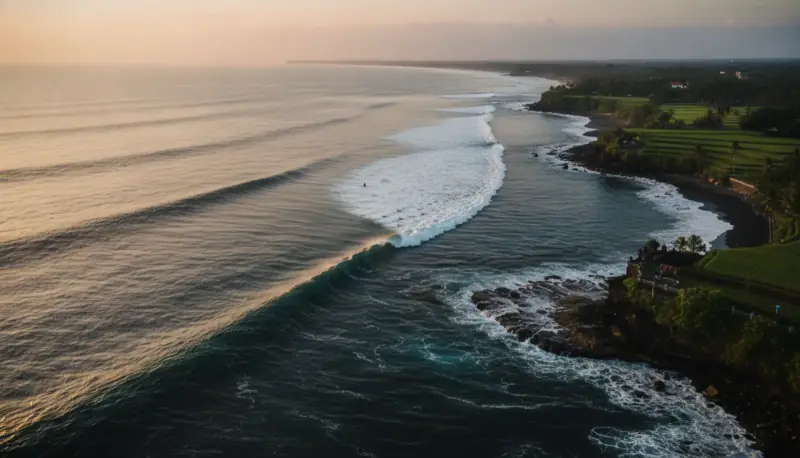
Not all waves break the same way, and knowing the difference can transform your surfing from frustrating to progressive. A reef break explodes with raw power and speed, the kind of wave that demands respect and serious skill. Beach breaks offer the forgiving, rolling walls most surfers learn on. Point breaks deliver that dreamy, unbroken line that keeps you riding for what feels like forever. Each break type has distinct characteristics: different takeoff zones, wave shape, swell window, and hazard profile. A wave that's perfect for one surfer can be unsuitable, or dangerous, for another. Understanding these three break types helps you choose appropriate destinations, assess your readiness, and match your surfing ambitions to the right conditions. Whether you're planning a lesson or camp or scouting spot guides, this breakdown cuts through the hype and gets you surfing the right waves.
What Makes a Break Different
The ground beneath the wave (sand, rock, reef, or cobble), determines everything about how the ocean stacks up and falls. Where the seafloor rises, the wave slows and piles up. How fast the rise happens changes the wave's shape, power, and breakdown pattern. Shallow, abrupt seafloor creates a steep wall that crumbles fast. Gradual, gentle slopes produce rolling, long-radius bends that peel away slowly. The same swell can produce a hollow tube at one location and a mellow rolling wave a quarter-mile away, all because of the bathymetry.
Break type also dictates where you paddle out and what you encounter when you fall. A beach break's sand is constantly shifting, last month's perfect takeoff zone might be eroded smooth today. That same mobility means paddling out is often straightforward; there's rarely a sharp drop or a maze of rocks. Reef and point breaks, by contrast, have fixed geometry. The wave will break exactly the same way tomorrow as it does today, which means you can dial in your approach. But that permanence cuts both ways: it also means the impact zone, the rocks, and the shallow edges stay exactly where they've always been.
Beach Breaks: Where Learning Happens
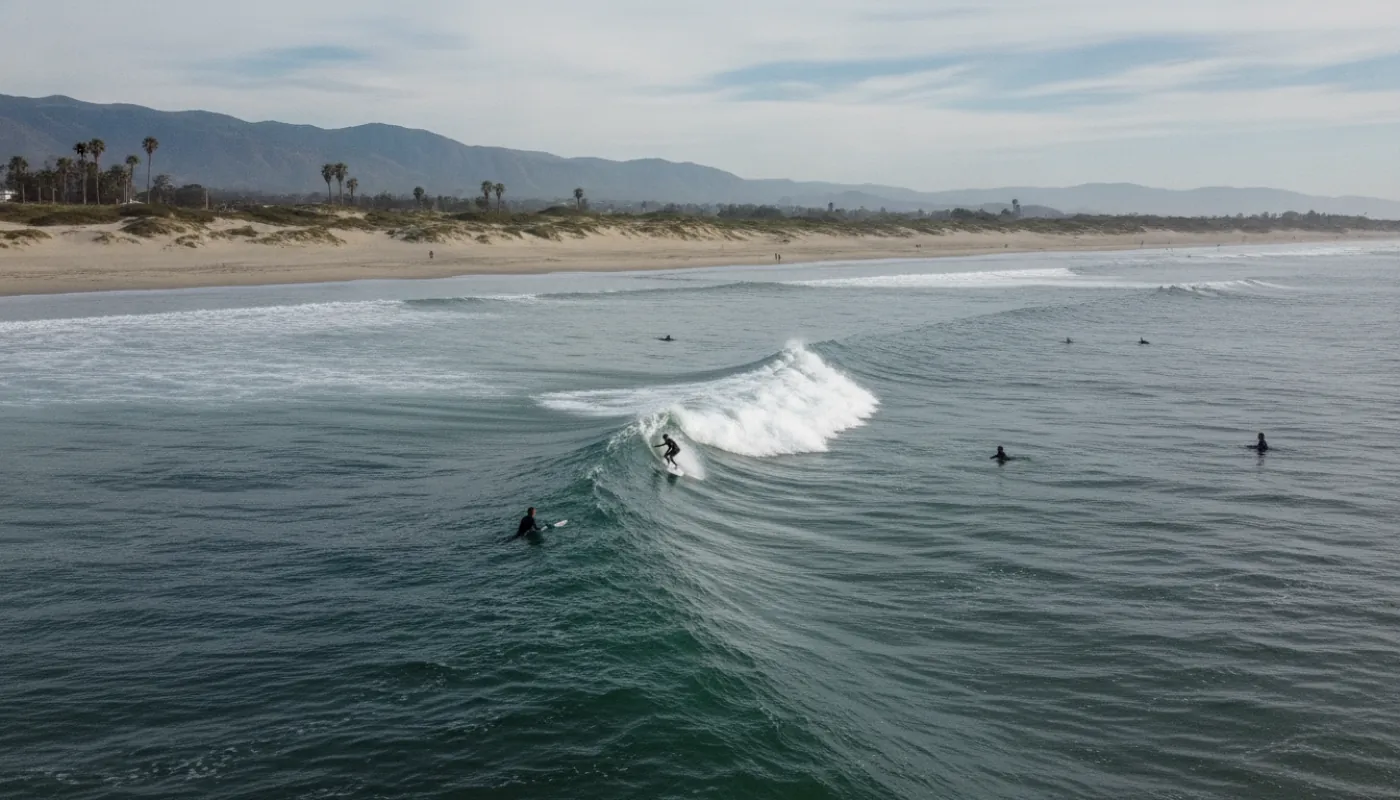
Beach breaks are where most surfers cut their teeth. The wave builds against sand, peaks near the shore, and crumbles into white water over a forgiving bottom. The shape is predictable: a steep wall with an open face, rolling off one direction or both. Fall here and you slide across sand, maybe scrape your shin, maybe not. Get worked and you're pushed toward shore, not over a drop-off. The swell window is often broad: beach breaks can turn on with smaller swells than reef or point breaks, which is why beach towns see more frequent, approachable sessions.
The downside is consistency. Beach breaks are in constant flux. Seasonal weather, storms, and even a single big swell can shift the shape of the sandbar and move the peak. Last week's perfect A-frame might close out or shift 50 yards down the beach. That unpredictability is humbling but also why beach breaks build adaptability. You learn to read the bar, adjust your takeoff position, and stay flexible. The learning curve is gentler; the wall is softer, the power is moderate, and the room for error is larger.
If you're booking a lesson or camp, beach breaks are the standard teaching tool. Instructors can position you at the peak, walk the lineup with you, and keep an eye on your technique without worrying about sharp rocks or hollow barrels. For solo surfers under a year of experience, beach breaks are the essential staircase. They're also ideal for days when swell is small or conditions are choppy, a crowded beach break in messy 2-foot wind chop is still better than a blown-out or unmakeable reef.
Point Breaks: The Consistency Sweet Spot
Point breaks wrap around a peninsula or headland, with the swell peeling off on a consistent angle, sometimes for a hundred yards or more. The wave builds against a rocky or cobble point, shoals gradually, and produces a predictable, rideable face that favors one direction. If you've ever dreamed of the endless, dreamy wave, that's the point-break fantasy. The geometry is so repeatable that surfers talk about "the usual spot" with a knowing nod; they know exactly where to sit, when to paddle, and what to expect.
The consistency is addictive. Because the point is fixed, the wave is reliable across swell sizes and tide windows. A point break might offer fun 3-foot peelers on small days and solid 6-foot walls on medium swell, all breaking in the same place with the same angle. This predictability means you can bring a friend, station them at a vantage point, and they'll see the exact wave quality and challenge you're facing. Instructors and advanced surfers love points for that reason, the wave cooperates with the plan.
The trade-off is skill and crowds. Consistent waves attract people, so lineups can be thick. The paddling route often requires navigating rocks or a specific channel, and the peak itself may be a tight takeoff zone where position matters. A point break also demands local knowledge. Shallow sections, rocks, current windows, and tide-dependent breaks aren't always obvious. Many points break better at a specific tide or swell direction, and botching the timing costs you a session.
Reef Breaks: Power and Peril
Reef breaks stand apart. The wave rises against a submerged or partially exposed reef: coral, rock, or consolidated shell. The seafloor climbs sharply, often in steps or as a sheer wall. The result is a wave that's steeper, faster, and more hollow than beach or point breaks at the same size. A 4-foot reef can feel like a 6-foot beach break; the power and speed are on another level. The barrel is real, the drop is dramatic, and the bottom turn is a committed move, not an easy pivot.
The consistency is also exceptional. Reefs are fixed; a reef break will perform the same way in twenty years as it did last month. The takeoff zone is precise, the peak is reliable, and the shoulder is predictable. That geometry makes reef breaks magnetic to experienced surfers: you learn the break deeply, read subtle swell variations, and develop a detailed mental map. The wave is honest; if you're positioned right, the wave will reward you. If you're off, it won't.
The hazard profile is the honest reckoning. Reefs are shallow. A wipeout on a reef means impact with shallow water, possible contact with the reef itself, and the ocean's full power compressed into a small space. Injuries are not hypothetical; they're part of the conversation. Many reef breaks also have a strong current or shape that funnels riders toward rocks or a sharp edge. Paddling out demands reading the lineup for the safest entry, and the paddle-back can be exhausting if the current is pushing you in the wrong direction.
Choosing Your Break by Skill Level
Match your ability to the break type that builds it. Beginners and surfers under a year of experience should focus on beach breaks. The margin for error is large, the impact zone is soft, and the wave shape rewards progressive learning. If a lesson or camp is in your plan, they'll almost certainly book you on beach breaks for exactly these reasons. This isn't caution, it's the fastest path to the skills that make harder waves safer.
Intermediate surfers (solid paddling, consistent wave-catching, maybe two to three years of regular sessions), have earned the point break game. Your skills are reliable enough to navigate a tight peak, position yourself in a crowd, and handle some consequence. Point breaks reward the intermediate surfer's improvement arc: the longer rides sharpen your rail work, the consistency lets you focus on technique, and the predictability builds the mental model you'll need for harder waves. Many intermediate camps and spots are based on points because the teaching environment is so controllable.
Advanced surfers (drop-knee turns, barrel-aware, strong in current, unshaken by consequence), can handle reef breaks. The power and speed demand fitness and technical depth that takes years to build. The shallow water and fixed hazards require local knowledge or a guide. A reputable camp or lesson at a reef spot will pair you with an instructor who knows the break intimately. Going to an unfamiliar reef break solo is a recipe for impact injuries or a humbling paddle back. Be honest about your capacity, and the break type will reward you with sessions that match your actual skill, not your ambition.